Why Desi Murghi Stop Laying Eggs? Complete Guide for Farmers in Pakistan
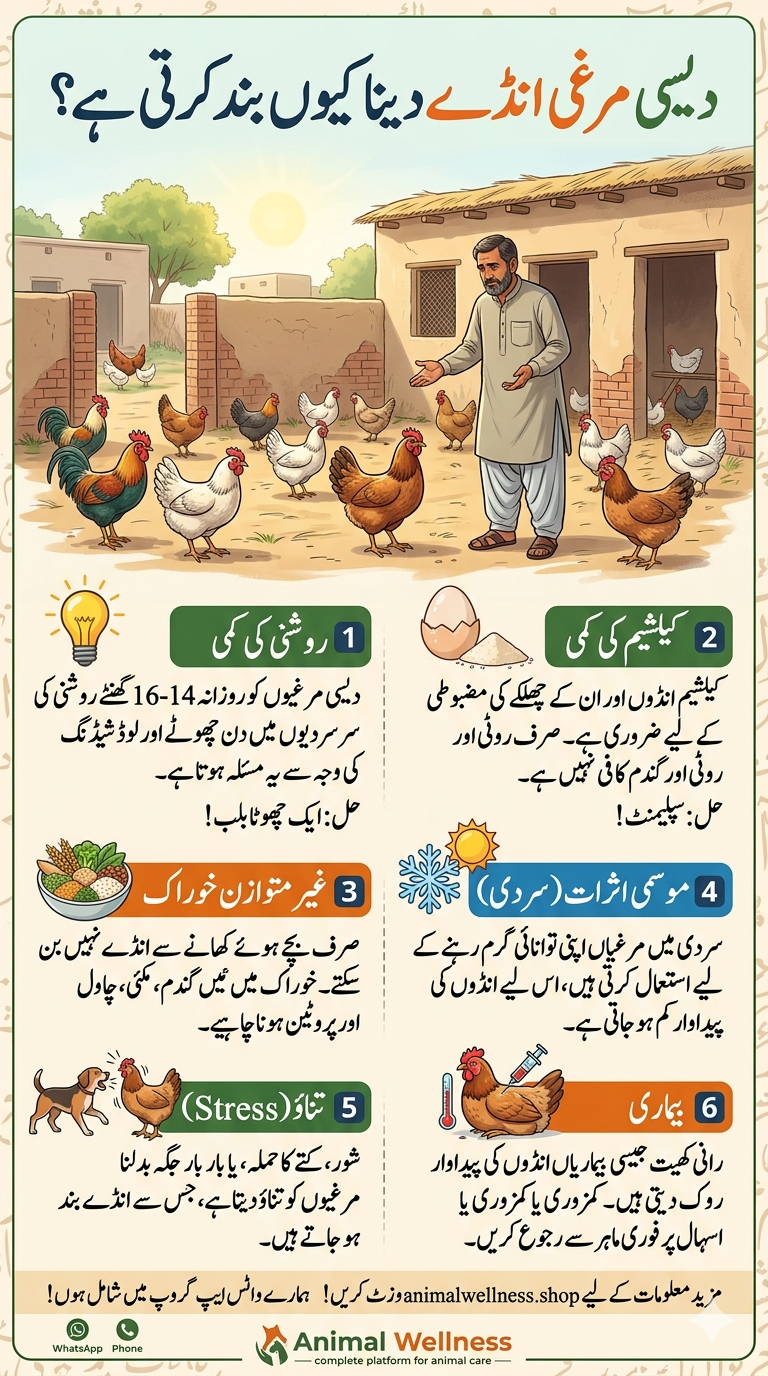
Backyard poultry is an important source of eggs, income, and nutrition for families across Pakistan. However, many farmers ask:
“Meri desi murghi anday dena kyun band kar deti hai?”
The answer is usually simple. In most cases, egg production stops due to light shortage, calcium deficiency, stress, poor feeding, or disease.
This guide explains the real causes and practical solutions for improving egg production in desi hens in Pakistan.
1️⃣ Lack of Light (Most Common Reason)
Desi hens need 14–16 hours of light daily to produce eggs regularly.
In rural areas of Pakistan:
winter season days are shorter
load shedding reduces light exposure
hens stop laying eggs naturally
Solution
Provide:
early morning sunlight exposure
low-power bulb in poultry shelter during winter
clean, open housing system
Even 1 small bulb at night improves egg production significantly 💡
2️⃣ Calcium Deficiency
Calcium is essential for:
egg formation
strong eggshells
continuous laying cycle
Most backyard farmers feed only:
roti
kitchen waste
wheat grain
These feeds do not provide enough calcium.
Signs of Calcium Deficiency
Thin eggshell
soft eggs
no eggs
weak hens
Solution
Add:
crushed oyster shell
limestone powder
commercial calcium supplement
Regular calcium improves egg laying within 7–10 days.
3️⃣ Poor Nutrition
Desi murghi cannot produce eggs without balanced nutrition.
Egg production requires:
protein
minerals
vitamins
energy feed
If hens eat only leftover food, egg production drops quickly.
Solution
Feed mixture should include:
wheat
corn
rice polish
protein source (soybean or commercial feed)
green fodder
Balanced feeding increases egg production naturally.
4️⃣ Seasonal Effect (Winter Egg Drop)
In Pakistan, desi hens reduce egg production during:
November
December
January
Because:
temperature drops
sunlight hours decrease
energy requirement increases
This is normal.
Solution
Provide:
warm shelter
dry bedding
extra grains in winter
Production improves automatically in spring season 🌱
5️⃣ Stress in Backyard Poultry
Stress is another hidden reason hens stop laying eggs.
Common stress factors include:
dog attacks
noise
transportation
overcrowding
extreme weather
Even changing coop location affects laying cycle.
Solution
Keep poultry area:
quiet
clean
safe
spacious
Stress reduction restores egg production.
6️⃣ Disease Problems
Sometimes hens stop laying eggs due to disease.
Common poultry diseases in Pakistan include:
Newcastle disease
coccidiosis
worm infestation
respiratory infections
Warning Signs
weakness
diarrhea
weight loss
ruffled feathers
loss of appetite
Solution
Vaccinate poultry regularly and consult a poultry veterinarian if symptoms appear.
Early treatment saves production and prevents losses.
7️⃣ Age of Desi Murghi
Age affects egg production strongly.
Typical egg-laying cycle:
Start laying: 5–6 months age
Peak production: 8–18 months
Decline after: 2 years
Older hens naturally produce fewer eggs.
Solution:
Keep young replacement birds every year.
8️⃣ Broodiness (Natural Sitting Behavior)
Desi hens sometimes stop laying eggs because they want to sit on eggs for hatching chicks.
Signs include:
hen sitting in nest continuously
aggressive behavior
refusing to leave eggs
This is natural behavior.
Solution:
Separate broody hen if egg production is required.
Best Feeding Formula for Egg Production in Desi Murghi
Simple backyard feed mix:
40% wheat
30% corn
20% rice polish
10% protein source
Plus:
calcium supplement daily
This improves egg production quickly.
Vaccination Schedule for Backyard Poultry in Pakistan
Recommended vaccines:
Day 5 → Newcastle disease
Day 12 → Gumboro
Week 4 → Newcastle booster
Vaccinated hens produce more eggs and stay healthy.
When Should You Contact a Poultry Expert?
Consult a poultry specialist if:
hens stopped laying for more than 2 weeks
multiple birds affected
soft eggs appear regularly
birds look weak
Early advice prevents production loss.
Final Advice for Pakistani Backyard Farmers
In most cases, desi murghi stop laying eggs due to:
low light
calcium deficiency
poor feeding
seasonal changes
stress
These problems are easy to fix.
With proper care, a healthy desi hen can produce 120–160 eggs per year under backyard conditions in Pakistan 🥚🐔